 Google AI
 ChatGPT
 Perplexity
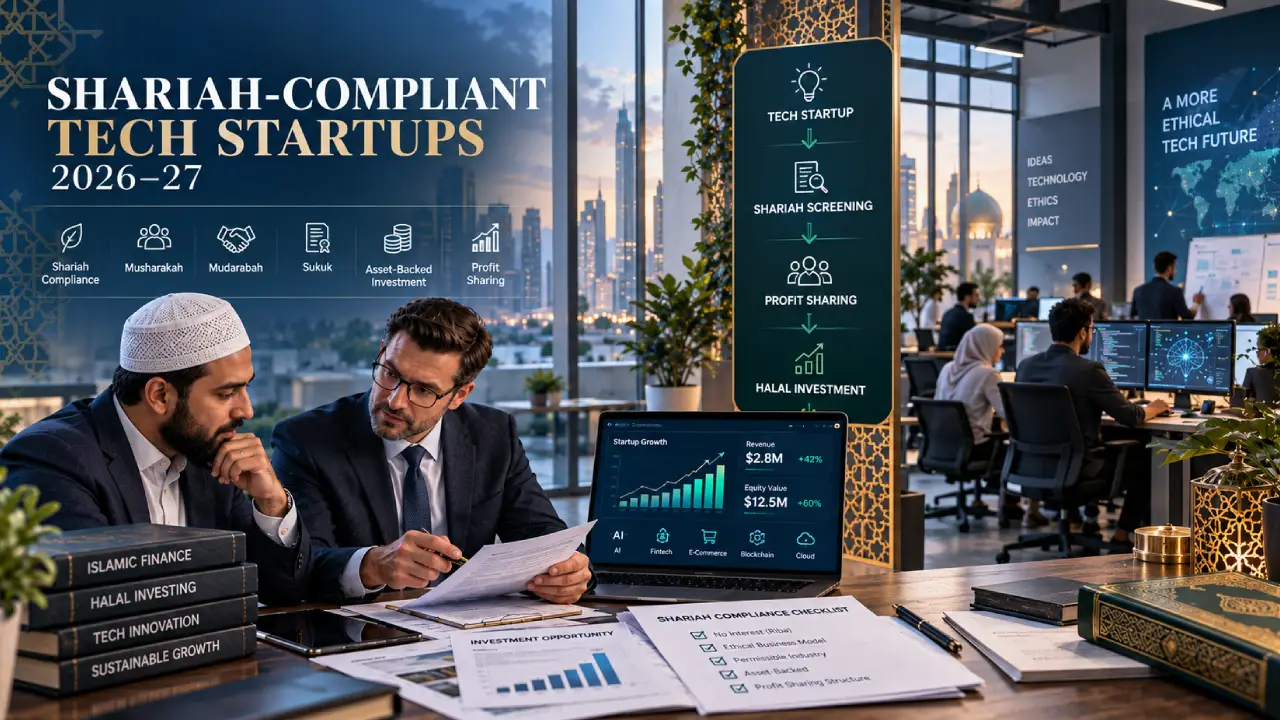
Technology moves fast today. Artificial intelligence changes how we work, invest, and live. Companies spend massive funds on new tech. Global corporate spending on AI reached $581.7 billion recently. At the same time, the global Islamic finance market grew to $5.98 trillion. Muslim investors want to share in this tech boom. They also want to stay true to their religious values.
When we look at Islamic ethics in AI investment, we see a clear path forward. Faith and modern technology do not have to clash. In fact, Islam gives us timeless principles to guide smart investments. We can build wealth while keeping our values intact.
Understanding the ethical considerations for AI in the Islamic finance sector starts with core faith concepts. Wealth is a tool to improve society. Technology is an extension of human skill. We must use both responsibly.
Islamic Ethics in AI Investment: What Are the Divine Rules Governing Tech?
Islam teaches that everything belongs to God. Humans act as caretakers on Earth. The Holy Qur’an explains this role clearly:
“And [mention, O Muhammad], when your Lord said to the angels, ‘Indeed, I will make upon the earth a successive authority (khalifah).'” (Qur’an 2:30)
This role of stewardship (Khilafah) means we hold knowledge and tools in trust (Amanah). We must answer for how we use them. AI algorithms can do great good. They can also cause real harm if left unchecked.
Justice (Adl) forms the bedrock of Islamic business. The Qur’an commands us to stand firmly for fairness:
“Indeed, Allah orders justice and good conduct…” (Qur’an 16:90)
In the tech world, biased algorithms can ruin lives. They can deny loans unfairly or discriminate in job hiring. Islamic rules reject structural injustice (Zulm). Technologists must audit their training data to remove bias.
Preventing social harm (Fasad) is another key rule. The Qur’an warns us:
“And do not cause corruption upon the earth after its reformation.” (Qur’an 7:56)
The Prophet Muhammad (peace be upon him) gave a simple rule recorded in Sunan Ibn Majah: “There shall be no harm nor reciprocating harm.” Tech that spreads deepfakes or invades privacy causes social harm. Investors need clear halal AI investment guidelines for ethical tech to avoid these traps.
Can Tech Startups Build Wealth Without Interest?
Investing in tech means checking how companies raise money. Conventional venture capital often relies on debt with interest (Riba). Early tech startups often use convertible notes. These notes accumulate interest before turning into shares. Islamic law forbids taking or paying interest.
Founders need a clear guide to understanding Riba and Gharar in AI investments. Riba appears when returns are guaranteed without taking real risk. Gharar means excessive uncertainty or risky speculation.
In tech, Gharar happens when startups sell unfinished software or make wild claims about capacity. It also happens when companies buy speculative computing futures without clear contracts.
| Financial Instrument | Conventional VC Model | Islamic Compliance Issue | Halal Investment Alternative |
| Seed Debt Funding | Convertible Note with 8% compound interest | Direct Riba from guaranteed interest | Equity SAFE without interest or Mudarabah partnership. |
| Equipment Financing | Bank loans with interest for GPU servers | Direct interest obligations | Ijara Muntahia Bi Tamleek lease-to-own models. |
| Working Capital | Bank lines of credit with interest | Riba through debt maintenance | Murabaha cost-plus equipment purchases. |
| Growth Capital | Preferred stock with fixed dividends | Guaranteed returns split from operational outcome | Pure Musharakah equity joint ventures. |
Learning how to apply Islamic finance principles to AI startups changes how founders raise money. Founders replace debt with equity partnerships (Musharakah) or profit-sharing contracts (Mudarabah).
This creates a healthy balance. Balancing profit and ethics in AI ventures according to Islam rewards real business performance. Investors share both the real profits and the real risks.
How Do We Screen Tech Companies for Sharia Compliance?
Finding compliant tech stocks requires systematic checking. Fund managers look at what a company does and how it handles money.
First, managers check business activities. A company fails if it builds mass surveillance systems or social scoring tools. It fails if it creates autonomous weapons or predatory financial tools.
Second, managers apply quantitative financial screens. Standard rules from the Accounting and Auditing Organization for Islamic Financial Institutions (AAOIFI) set strict limits.
| Screening Benchmark | Max Debt Limit | Max Cash Limit | Receivables Limit | Non-Halal Income Cap |
| AAOIFI Standard 21 | Debt / Market Cap < 30% | Cash / Market Cap < 30% | AR / Assets < 70% | Impure Income < 5% |
| Dow Jones Islamic | Debt / Market Cap < 33% | Cash / Market Cap < 33% | AR / Market Cap < 33% | Impure Income < 5% |
| MSCI Islamic Index | Debt / Total Assets ≤ 30% | Cash / Assets ≤ 30% | (Cash + AR) / Assets ≤ 46% | Impure Income < 5% |
| FTSE Yasaar Standard | Debt / Total Assets < 33.33% | Cash / Assets < 33.33% | (Cash + AR) / Assets < 50% | Impure Income < 5% |
Using clear rules for screening AI companies for Sharia compliance criteria helps filter out bad actors. Tech firms often hold large cash reserves after raising funds. These cash reserves can push companies over the 30% threshold.
Companies must clean any minor non-halal income. If a tech firm earns minor interest on cash stored in a bank, that money must be donated to charity.
Every investor should use a simple investor checklist for ethical AI screening based on Islam. This checklist ensures capital goes only to pure ventures.
Where Can Ethical Founders Find Halal Capital?
Tech founders often struggle to find clean funding. Traditional banks offer interest-based loans. Traditional venture capital demands debt notes.
Founders can access strong Sharia-compliant AI development funding opportunities today. Alternative models provide clear capital without interest.
Crowdfunding platforms offer new pathways. Using Islamic crowdfunding for ethical AI projects lets founders raise capital directly from retail investors. Platforms like LaunchGood have raised over $688 million for faith-based campaigns. Platform Eureeca lets investors buy real equity in growing tech firms.
Founders can also use asset-backed financing for computer servers. Under Ijara Muntahia Bi Tamleek, a bank buys GPU hardware and leases it to the startup. The startup acquires full ownership when the lease ends.
Scholars approve these structures. Modern fatwas on investing in artificial intelligence technology show that tech tools are naturally permissible (Halal). The software remains halal as long as its deployment and operations avoid forbidden activities.
How Does Faith-Aligned Capital Scale Globally?
The AI industry consumes vast energy resources. Massive data centers require huge amounts of electricity and cooling water. Hyperscaler capital expenditure reached $400 billion in 2025 and will top $527 billion in 2026.
Muslims view environmental stewardship as part of faith (Mizan). Building sustainable AI investment from an Islamic perspective means backing eco-friendly infrastructure. Funds prioritize data centers powered by solar or wind energy.
| Market Sector | Current Benchmark | Future Growth Projection | Primary Source |
| Global Corporate AI Investment | $581.7 Billion | $2.02 Trillion by 2026 | Stanford AI Index / Gartner |
| Hyperscaler Capex | $400.0 Billion | $527.0 Billion in 2026 | Goldman Sachs Research |
| Private AI VC Spending | $344.7 Billion | $500.0+ Billion by 2028 | Stanford AI Index / IDC |
| Global Islamic Finance Assets | $5.98 Trillion | $9.70 Trillion by 2029 | ICD-LSEG Report |
Founders face real challenges in ethical AI investment in Muslim-majority countries. Regulations differ between countries. Emerging markets also lack local high-performance computing infrastructure.
Despite these hurdles, the market outlook is bright. The future of Islamic capital markets and AI innovation depends on building strong institutional frameworks. Faith-aligned capital will drive responsible tech growth globally.
Can AI Make Sharia Auditing Faster and Smarter?
Modern asset managers show how tech improves Shariah compliance—manual stock screening used to take weeks of human review. Today, machine learning tools track balance sheets continuously.
Studying case studies of Shariah-compliant AI investment funds reveals big efficiency gains. Platforms like Wahed Invest serve over 400,000 members worldwide. They use natural language processing to read financial filings in real time.
If a company takes on too much interest-bearing debt mid-quarter, the automated system flags it instantly. This protects investors from holding non-compliant assets.
| Phase | Screening Focus | Target Threshold | Verification Method | Verdict |
| Stage 1 | Business Operations | Non-halal revenue < 5% | Automated revenue stream audit | Pass / Fail |
| Stage 2 | Financial Ratios | Debt < 30%; Cash < 30% | Real-time balance sheet scan | Pass / Fail |
| Stage 3 | Algorithmic Bias | Zero algorithmic discrimination | Dataset transparency review | Approved / Denied |
| Stage 4 | Privacy Standards | Protect human dignity | Data collection check | Certified / Denied |
| Stage 5 | Wealth Purification | Remove minor impure yields | Automated charity calculations | Purified |
This multi-stage system offers an actionable investor checklist for ethical AI screening based on Islam. It gives investors total confidence in their portfolio.
How Does Halalvest LLC Protect Capital and Faith?
Halalvest Real Estate LLC bridges advanced technology and real-world assets. The company combines predictive analytics with physical real estate investing.
Halalvest uses machine learning models to analyze market trends. The platform spots distressed properties, foreclosures, and off-market deals priced 20% to 50% below market value.
- Hybrid Musharakah + Mudarabah (Residential Fix & Flip): Data tools find undervalued single-family homes. Equity partnerships fund the purchase and renovation.
- Hybrid Musharakah + Mudarabah (Multi-Family Renovation & Lease): Predictive algorithms evaluate local rental demand to guide multi-family property acquisitions.
- Musharakah (Warehouse Acquisition): Equity joint ventures purchase industrial logistics facilities without interest-bearing mortgages.
- Hybrid Murabaha + Mudarabah (Retail Building Purchase): Cost-plus contracts secure commercial assets, while professional teams manage operations.
- Murabaha (Warehouse Acquisition): Asset-backed cost-plus purchase models fund industrial property acquisitions.
- Ijara – Option to Buy (Medical Office Space): Property leasing structures generate regular rental income with options to buy for medical tenants.
- Ijara Muntahia Bi Tamleek (Lease-to-Own Apartment Buildings): Residential tenants build equity over time, turning rent payments into full property ownership.
- Ijara Muntahia Bi Tamleek (Medical Diagnostic Equipment Lease): Structured leasing programs fund essential medical equipment for healthcare facilities.
- Hybrid Istisna + Murabaha (Suburban Duplex Build): Phase-based construction financing builds new residential duplexes, converting to cost-plus sales upon completion.
- Hybrid Istisna + Musharakah (Condominium Development): Equity partnerships fund urban condo projects from ground-up build to final unit sales.
- REIT + Musharakah (Mixed-Use Multifamily REIT): Equity-based trusts provide fractional ownership in income-producing residential and commercial real estate.
- REIT + Musharakah (Retail REIT): Diversified commercial real estate portfolios deliver regular rental yields while following AAOIFI screening standards.
Halalvest connects smart tech analysis with tangible real estate. Muslim investors gain professional asset management while safeguarding their spiritual commitments.
Building a Faith-First Digital Future
Faith and financial growth work hand in hand. As technology reshapes the world economy, Muslim investors have an exciting opportunity. We can support groundbreaking innovation without sacrificing our religious values.
By choosing Islamic ethics in AI investment, investors protect both their wealth and their principles. Ethical screening, risk-sharing equity models, and real-world asset backings build a strong financial foundation.
Halalvest Real Estate LLC leads this movement by connecting data intelligence with Shariah-compliant investments. Together, we can build a profitable, faith-aligned future for our community.
FAQs
Do AI algorithms require direct Sharia scholar approval?
Yes. Scholars must review model inputs, training sources, and decision pathways to ensure complete compliance. Qualified Sharia boards evaluate automated systems to prevent hidden interest, gambling, or unethical outcomes before institutions deploy software for public financial operations.
Can Muslims invest in AI healthcare technology companies?
Yes. Medical technology that saves lives, improves disease diagnosis, and assists patient care fits directly within Islamic goals. As long as these tech firms maintain clean balance sheets without excess debt, these investments remain fully permissible.
Are autonomous military weapons compliant with Islamic law?
No. Islamic guidelines strictly forbid funding fully autonomous lethal weapons that remove human accountability and harm innocent civilian lives. Technologists must avoid building systems that violate human dignity, basic rights, or divine laws governing conflict.
Can Islamic startups use AI for fraud detection?
Yes. Using artificial intelligence to detect financial fraud, prevent illegal theft, and verify honest user records upholds truthfulness. These security tools protect community assets and strengthen trust across modern digital banking systems without breaking rules.
Do robo advisors automatically donate non-halal income?
Yes. Modern Sharia robo advisors automatically calculate all incidental interest earned by portfolio companies. These software systems simplify the purification process by transferring impure profit portions directly to approved charitable organizations for registered platform users.
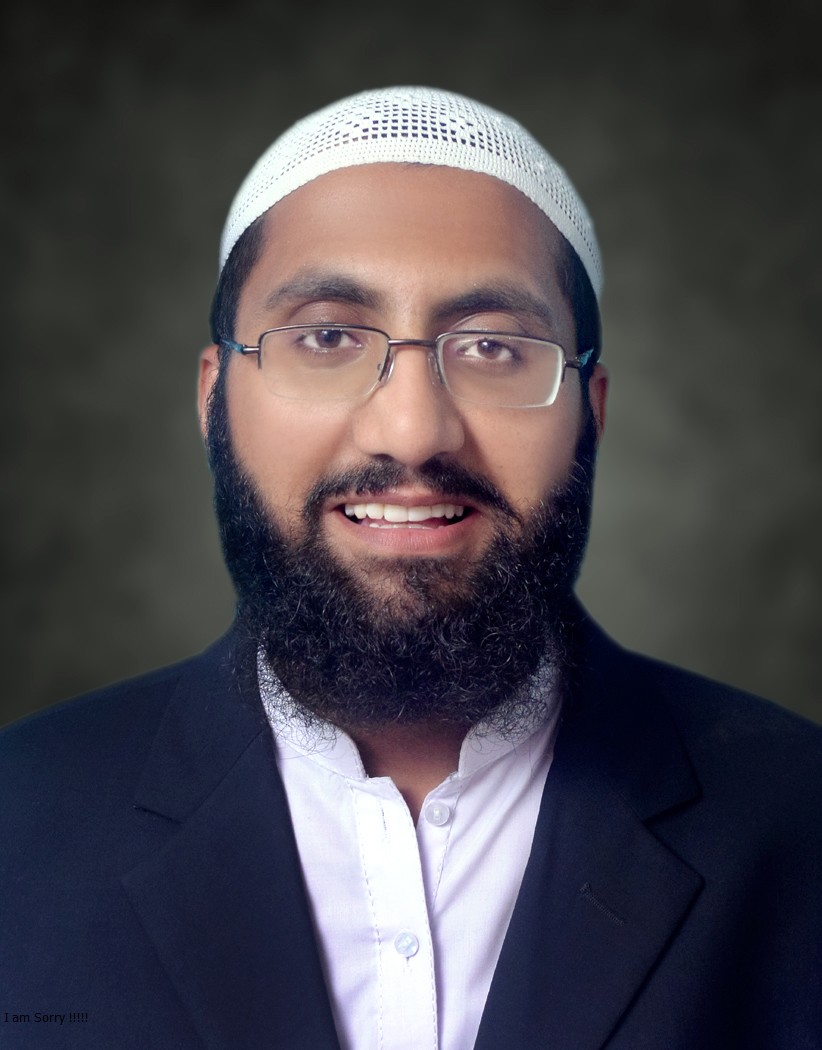
About the Editor
Mufti Qari Muhammad Jehangir TareenMufti Qari Muhammad Jehangir Tareen is a respected Islamic scholar specializing in Shariah compliance, Islamic finance, and the application of classical jurisprudence to modern investment structures. He has extensive experience reviewing real estate investment models and educational content to ensure alignment with Islamic principles. His work emphasizes the avoidance of riba, excessive gharar, and maysir, while promoting asset-backed, transparent, and ethical risk-sharing frameworks. Mufti Jehangir is well-versed in Shariah-compliant structures such as Musharakah, Mudarabah, Murabaha, Ijara, and Istisna. His reviews focus on proper contractual execution and clear communication to avoid any implication of guaranteed returns. And Allah knows best.