 Google AI
 ChatGPT
 Perplexity
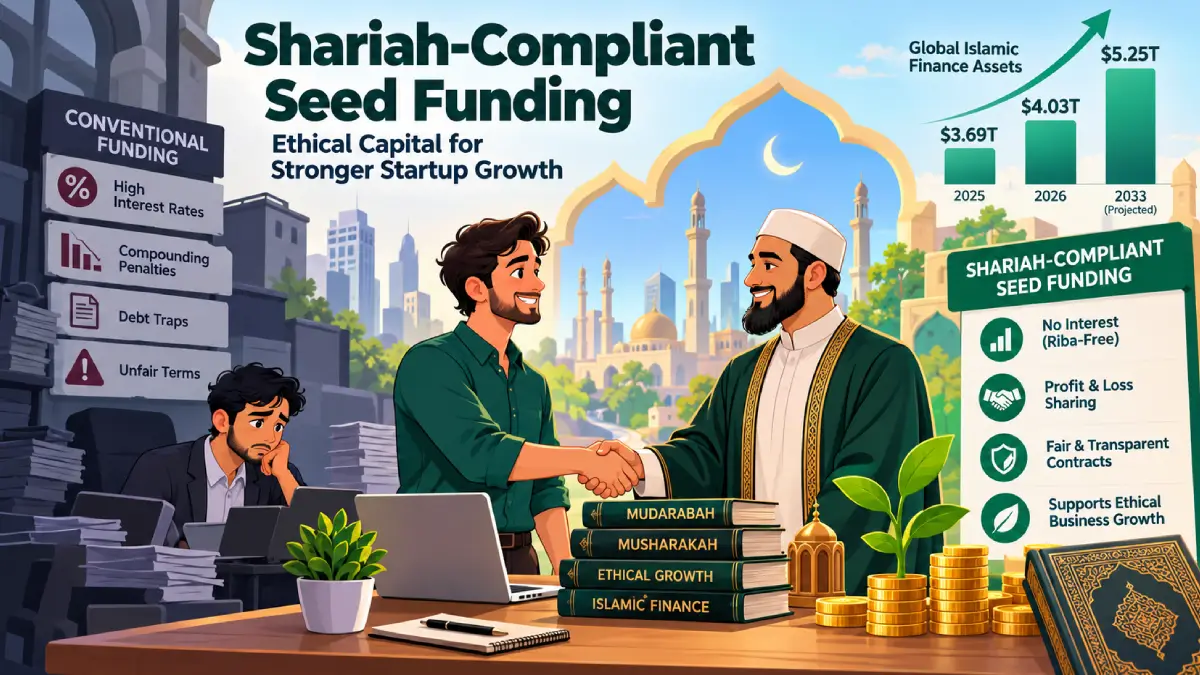
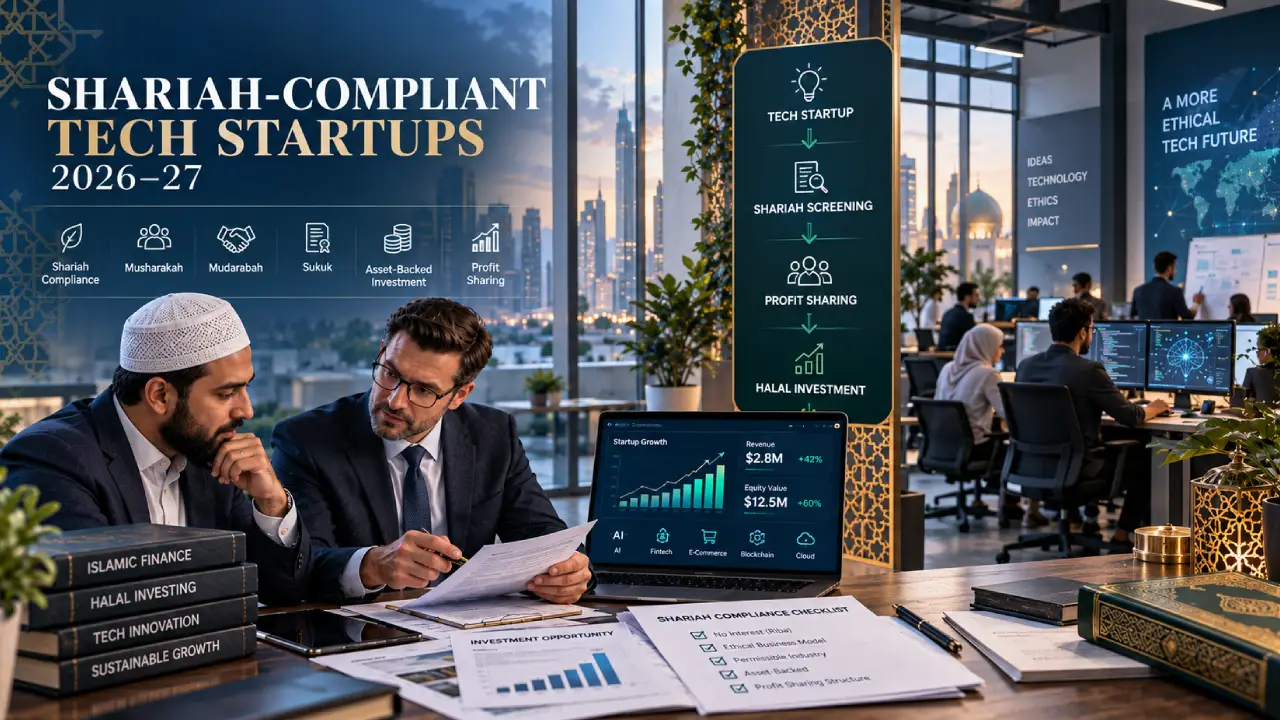
You want your money to work hard for you. You also want your investments to match your faith and morals. Balancing personal values with solid financial returns used to feel complicated. Today, direct access to high-growth Shariah-compliant tech startups in 2026 gives smart investors a powerful way to build real wealth without compromising their principles.
Muslim investors across the United States are looking for alternatives to standard interest-bearing accounts and risky speculative markets. They want pure, asset-backed opportunities that respect Islamic law. Finding verified opportunities in tech can transform how you build family wealth. This guide explores how investing in Shariah-compliant tech startups 2026-2027 allows you to back cutting-edge innovation while safeguarding your spiritual commitment.
Understanding Faith-Aligned Tech Innovation
What is a Shariah-compliant tech startup 2026-2027 definition?
A faith-aligned technology company designs digital products that follow Islamic commercial law (Fiqh al-Muamalat). These businesses use cloud computing, mobile apps, artificial intelligence, and software networks to solve everyday problems. They protect their operational revenue, corporate contracts, and cash flows from prohibited elements.
Islamic finance rules require every operating platform to remove four main elements:
- Riba: Charging or paying guaranteed interest on loans.
- Gharar: Unclear or ambiguous contract terms that hide true risks.
- Maysir: Pure gambling, unbacked speculation, or extreme risk-taking.
- Prohibited Products: Operations linked to alcohol, pork, weapons, or conventional banking.
The Holy Quran establishes the principle of fair commerce built on physical value and mutual agreement:
“O believers! Do not devour one another’s wealth illegally, but rather trade by mutual consent.” (Surah An-Nisa 4:29)
“Allāh has permitted trade and has forbidden interest.” (Surah Al-Baqarah 2:275)
Prophetic teachings also stress the importance of clear, honest income. In Sahih al-Bukhari, Abu Hurairah (ra) reported that Prophet Muhammad (ﷺ) warned:
“Certainly a time will come when people will not bother to know from where they earned the money, by lawful means or unlawful means.” (Sahih al-Bukhari 2083)
Clear contract terms stop hidden interest or unfair price markups. In Sahih al-Bukhari 2302/2303, the Prophet instructed traders to sell commodities for clear liquid currency before buying other goods. This simple rule prevents indirect usury (Riba al-Fadl) and protects both parties.
Modern software applications lock these rules into their code through three distinct tech layers:
- Product Layer: Features only approved Islamic contracts like Musharakah or Murabaha.
- Ledger Layer: Calculates actual profit shares and drops interest calculations.
- Governance Layer: Tracks real-time scholar reviews and handles Zakat calculations.
How does the impact of Islamic finance on tech innovation 2026-2027 drive real growth?
Ethical finance rules force developers to build software that links directly to real assets and actual business profit. Instead of relying on heavy debt, tech founders create transparent systems that build trust with users.
Recent market data shows fast expansion across global Islamic markets:
- The global Islamic finance market reached $5.10 trillion in 2026 and is on track to hit $8.46 trillion by 2031, growing at a 10.70% annual rate.
- Total global Islamic banking assets, capital markets, and Takaful funds now stand at $5.98 trillion.
- Global Islamic fintech transactions hit $198 billion and are heading toward $341 billion by 2029.
These numbers show that ethical business models attract steady global capital.
What are the growth predictions for Islamic tech startups 2026-2027?
Tech ventures backed by Islamic finance principles are expanding rapidly across North America, Southeast Asia, and the Gulf region. Investors want clear assets and low corporate debt.
Three clear market trends are driving current growth:
- Institutional venture funds are pouring fresh capital into screened software platforms.
- AI platforms now screen stocks, track portfolio purity, and calculate Zakat in seconds.
- Blockchain tools let retail investors buy fractional shares of real estate and commercial assets.
Why Are Shariah-Compliant Tech Startups Leading the Market in 2027?
List of Shariah-compliant fintech startups 2026-2027
Fintech platforms lead the way in digital Islamic finance. They give retail investors simple digital tools for savings, invoice trading, and global portfolio management.
| Startup Name | Core Market | Business Model | Key Product Features |
| Wahed Invest | USA / Global | Mudarabah & Sukuk | Halal robo-advisory app with screened ETFs and global stocks. |
| Hakbah | Saudi Arabia | Digital Savings Pools | Regulated app digitizing traditional group savings circles. |
| Lendo | GCC Region | Murabaha Factoring | Platform converting unpaid SME invoices into working cash. |
| Raqamyah | GCC Region | P2P Profit Sharing | Direct peer-to-peer debt-free crowdfunding for small businesses. |
| Fasset | Global | Tokenized Assets | Financial super-app offering fractional assets on blockchain rails. |
| Sarwa | UAE / Middle East | Halal Equity Portfolios | Low-cost digital investment portal with automated halal portfolios. |
| Rain | GCC Region | Licensed Digital Currency | Certified digital asset exchange with direct local bank connections. |
Emerging Shariah-compliant blockchain startups 2026-2027
Blockchain ledgers fit naturally with Islamic financial principles. Public ledgers make contract terms clear, show asset history, and enforce profit splits automatically through smart contracts.
Decentralized finance platforms deploy three major tools:
- Tokenized Sukuk: Companies issue digital bonds backed by real physical assets, opening institutional deals to everyday retail investors.
- Smart Contract Murabaha: Code verifies asset ownership before releasing funds, keeping trade transparent.
- Decentralized Mudarabah Pools: Investors put capital into audited smart contracts, sharing real business profits based on clear code.
Shariah-compliant AI startups funding 2026-2027
Venture capital is backing artificial intelligence tools designed for Muslim communities and ethical enterprise needs. Founders are building tools that address real operational challenges.
Promising AI startups gaining strong market traction include:
- Qara’a: An AI-driven learning platform that uses voice recognition to check Quranic pronunciation and Tajweed rules in real time.
- HealthPro: An intelligent staffing tool that matches verified nurses and doctors with hospitals to fill open shifts quickly.
- XENTRI Dynamics: An autonomous security platform that combines drone feeds and predictive analytics to protect commercial facilities.
- Synbiozymes: A clean biotech startup that uses AI to convert organic waste into sustainable protein for animal feed.
Top Shariah-compliant e-commerce startups to watch 2026-2027
E-commerce companies are changing online retail by combining clean supply chains with fair payment choices. They track sourcing to ensure products meet ethical guidelines.
Online store checkouts now offer zero-interest payment schedules based on clear Murabaha cost-plus rules. Customers pay the exact listed price in simple equal installments without surprise late fees or compound interest penalties.
How are we comparing Shariah-compliant tech startup sectors 2026-2027?
| Sector | Market Growth Rate | Regulatory Requirements | Primary Contract Structure | Risk Level |
| Fintech | 11.5% CAGR | High (Central Banks & Boards) | Murabaha, Mudarabah, Wakalah | Low to Medium |
| Artificial Intelligence | 28.2% CAGR | Medium (Data & Ethical Rules) | Equity Shares, Joint Ventures | High |
| Blockchain & Web3 | 22.4% CAGR | High (Asset Regulations) | Tokenized Sukuk, Smart Musharakah | High |
| E-Commerce | 14.1% CAGR | Low (Halal Verification) | Murabaha, Salam, Istisna | Low |
| HealthTech | 18.7% CAGR | High (Medical Approvals) | Mudarabah, Equity Shares | Medium |
Smart Capital and Investment Models
Venture capital for Shariah-compliant tech startups 2026-2027
Standard venture capital relies heavily on debt notes, preferred returns, and guaranteed liquidation payouts. These structures violate Islamic rules against fixed interest and unfair risk distribution. Dedicated ethical funds like HASAN.VC invest using true risk-sharing partnerships.
Islamic capital relies on two main investment contracts:
- Musharakah (Joint Partnership): Investors and founders put capital into the business. They share profits by agreement and split losses based on equity ownership percentages.
- Mudarabah (Trustee Capital): Investors provide total funding, while founders manage operations. Profits follow agreed percentages, while financial losses fall on capital providers if managers act in good faith.
Halalvest pairs these deeply discounted assets with technology ventures using 12 structured investment models:
- Hybrid Musharakah + Mudarabah (Residential Fix & Flip)
- Hybrid Musharakah + Mudarabah (Multi-Family Renovation & Lease)
- Musharakah (Warehouse Acquisition)
- Hybrid Murabaha + Mudarabah (Retail Building Purchase)
- Murabaha (Warehouse Acquisition)
- Ijara – Option to Buy (Medical Office Space)
- Ijara Muntahia Bi Tamleek (Lease-to-Own) (Apartment Building Acquisition)
- Ijara Muntahia bi Tamleek (Lease-to-Own) (Medical Diagnostic Equipment Lease)
- Hybrid Istisna + Murabaha (Suburban Duplex Build)
- Hybrid Istisna + Musharakah (Condominium Development)
- REIT + Musharakah (Mixed-Use Multifamily REIT)
- REIT + Musharakah (Retail REIT)
These structures protect private capital while building real equity across growing markets.
Why is Sukuk financing for tech startups Shariah 2026-2027 gaining ground?
Growing tech firms need expansion capital, but interest-bearing corporate loans create impermissible debt. Asset-backed digital certificates solve this problem by offering an alternative to standard corporate bonds.
Startups issue digital certificates tied to real physical assets like server hubs, offices, or data equipment. Certificate holders own proportional shares of those physical assets, earning income from real rental contracts (Ijara) or trade markups (Murabaha).
Ethical investment opportunities in tech 2026-2027 Shariah
Values-based investing shares core goals with global Environmental, Social, and Governance (ESG) standards. Both frameworks reject harmful industries, protect natural resources, and demand clear corporate management.
Promising ethical sectors include:
- Smart grid applications that lower energy waste across commercial facilities.
- Sustainable farming tech that saves water while increasing regional food supplies.
- Healthcare software that expands diagnostic tools into underserved communities.
- Community finance tools offering interest-free micro-loans (Qard Hasan) to help small local businesses scale.
Strategic Execution and Finding Opportunities
What are the main challenges for Shariah-compliant tech startups in 2026-2027?
Building a faith-aligned tech company requires navigating complex operational demands:
- Board Standards: Different regional scholar boards can interpret guidelines differently, requiring local adjustments.
- Cross-Border Banking: Managing regulatory approvals and multi-country tax rules takes time and careful planning.
- Engineering Costs: Building custom logic for asset screening and real-time ledger audits increases early development budgets.
- Secondary Market Liquidity: Selling private startup shares takes longer than trading public equities, though digital crowdfunding platforms are closing the gap.
How to find Shariah-compliant tech startups for investment 2026-2027?
Finding solid tech investments requires a simple four-step evaluation process:
- Review Core Revenue Sources: Verify that zero company revenue comes from alcohol, interest banking, gambling, or non-halal media.
- Audit Corporate Balance Sheets: Confirm that interest-bearing debt stays below 33% of total assets or market valuation.
- Check Board Endorsements: Ensure the company holds current written certification from qualified scholars.
- Examine Investor Terms: Confirm that term sheets and stock options use approved Musharakah, Mudarabah, or Wakalah legal contracts.
Future of Islamic digital economy startups 2026-2027
The digital economy is connecting software applications directly with real physical assets. Automated compliance tracking and real-world asset tokenization allow investors to back high-performing tech companies without sacrificing their faith commitments. Companies that combine strong software tools with clear Islamic finance contracts will continue to attract steady capital.
Building Your Wealth with Halal Innovation
Investing wisely means putting your capital to work where it can earn strong returns while honoring your spiritual values. The rapid expansion of Shariah-compliant tech startups offers a direct path to wealth building for Muslim investors across North America.
You can back high-growth software platforms, tokenized commercial real estate, or profit-sharing partnerships without touching interest-based financing. Working with experienced partners helps protect your portfolio against market swings.
Halalvest Real Estate LLC gives you direct access to pre-vetted real estate and venture opportunities. Our team uses deep market expertise, over 1,000 active industry relationships, and 12 flexible investment models to help you grow your portfolio with complete confidence. Reach out to Halalvest Real Estate LLC today to explore asset-backed investment opportunities designed for your financial future.
FAQs
Can non-Muslims invest in Shariah tech startups?
Yes. Anyone can invest in these ethical tech startups. They focus on transparency, real assets, and risk sharing. This structure appeals to all investors who want fair, values-driven financial growth without predatory debt or hidden account fees.
Do Shariah tech startups pay annual Zakat?
Yes. Most Shariah-compliant platforms calculate Zakat directly within their system logic. Company rules or individual portfolio tools calculate mandatory annual charity based on net eligible asset values, helping investors meet religious wealth purification duties each fiscal year.
Are crypto assets automatically considered Shariah compliant?
No. Cryptocurrencies require active screening for utility, asset backing, and risk. Tokens linked to pure speculation, unbacked debt, or interest protocols fail Islamic rules, while asset-backed tokens with clear software utility can achieve scholar board certification.
Can early-stage tech startups issue Sukuk?
No. Early-stage startups usually lack the physical assets and steady revenues required for Sukuk issuances. Growth-stage companies use Sukuk by backing certificates with data centers, equipment, or commercial real estate to raise debt-free expansion capital safely.
Is equity crowdfunding legal for Muslim investors?
Yes. Equity crowdfunding aligns closely with Islamic profit-sharing principles like Musharakah. Investors acquire direct equity shares in physical or digital businesses, sharing actual business growth and operational risks rather than receiving guaranteed, fixed interest payout returns.
About the Editor
Mufti Qari Muhammad Jehangir TareenMufti Qari Muhammad Jehangir Tareen is a respected Islamic scholar specializing in Shariah compliance, Islamic finance, and the application of classical jurisprudence to modern investment structures. He has extensive experience reviewing real estate investment models and educational content to ensure alignment with Islamic principles. His work emphasizes the avoidance of riba, excessive gharar, and maysir, while promoting asset-backed, transparent, and ethical risk-sharing frameworks. Mufti Jehangir is well-versed in Shariah-compliant structures such as Musharakah, Mudarabah, Murabaha, Ijara, and Istisna. His reviews focus on proper contractual execution and clear communication to avoid any implication of guaranteed returns. And Allah knows best.