 Google AI
 ChatGPT
 Perplexity
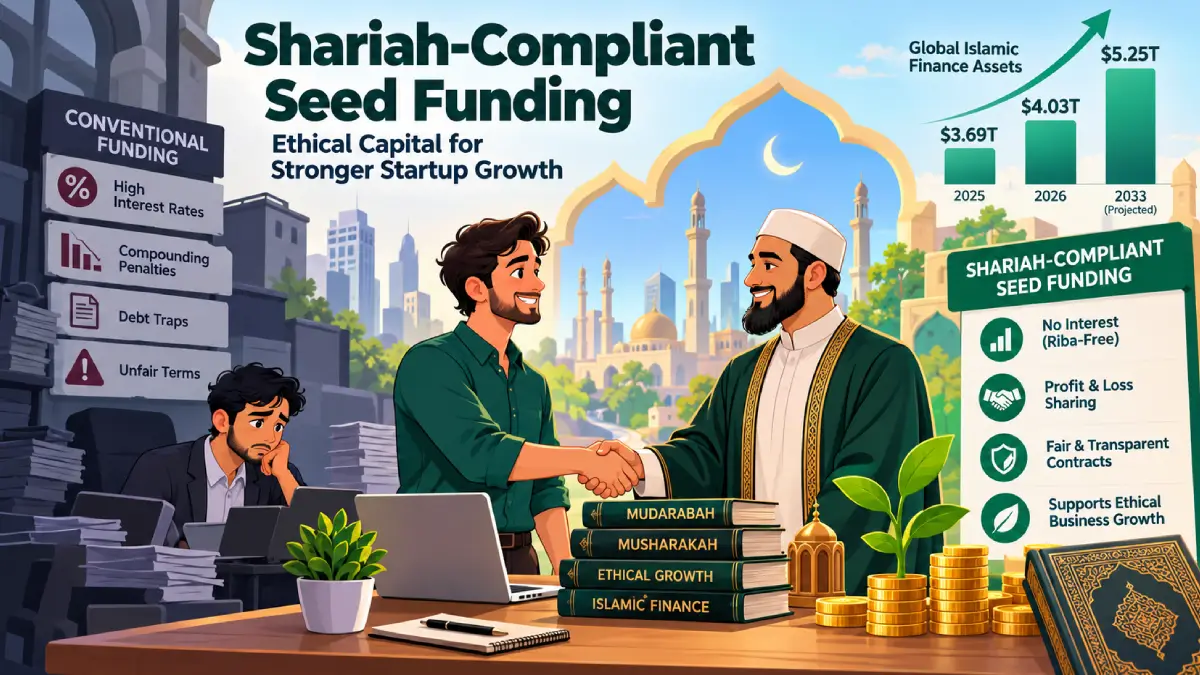
For many Muslim business owners and investors in the USA, the path to financial independence often feels like a series of compromises. You want to grow your wealth, provide for your family, and secure your future. But everywhere you turn, the traditional financial system is built on foundations that conflict with your faith. The “pain” of being forced into interest-based debt or seeing your capital used in non-compliant ventures is a real burden for the conscientious believer. However, a transformation is underway in 2026. You no longer have to choose between material success and spiritual integrity. By focusing on halal passive income properties, you can unlock a level of ethical wealth that carries both financial reward and Barakah (divine blessing).
At HalalVest Real Estate LLC, we understand this struggle. We have spent decades bridging the gap between sophisticated real estate acquisition and strict Sharia compliance. With a network of over 1,000 private lenders, investors, traditional brokers, and realtors, our platform identifies assets 20%-50% below market value, including foreclosures and auctions. This isn’t just about avoiding Riba; it’s about participating in the real economy through tangible assets and risk-sharing.
Is Your Wealth Growing with Divine Blessing or Hidden Burdens?
The cornerstone of Islamic commercial law is the distinction between just trade and exploitative lending. In Surah Al-Baqarah (2:275), Allah clearly states: “Allah has permitted trade and has forbidden Riba.” This isn’t just a rule; it is a blueprint for a healthier economy. Traditional financing is a “Pain point” because it relies on the passage of time to guarantee a return, regardless of whether the venture succeeds or fails. This creates a debt trap that often concentrates wealth at the top while leaving the borrower to bear all the risk.
In contrast, what makes a halal investment property for passive income is the transition from being a lender to being an owner or a partner. When you invest in real estate Islamically, your profit is justified by the assumption of risk, a concept known as Al-Ghunm bi al-Ghurm. If the property value goes up or rental income is strong, you share in that success. If the market dips, you share in that loss proportionally. This shared-risk model aligns the interests of everyone involved, fostering a relationship of mutual benefit rather than one of creditor and debtor.
As the Prophet Muhammad (peace be upon him) said in a Hadith reported in Sahih Bukhari, “No one has ever eaten a better meal than that which one has earned by working with one’s own hands.” Investing in real assets like warehouses, duplexes, and medical offices represents the “manual labor” of capital, where money is tied to real productivity, construction, and housing.
Comparing Conventional vs Halal Passive Income Property Returns: The 2026 Reality
A common myth is that being ethical means accepting lower returns. However, recent data for 2025 and 2026 suggest the opposite. According to research from the Harvard Islamic Finance Project and the 2025 Forbes Shariah Manager Watch Survey, Sharia-compliant portfolios often outperform conventional ones on a risk-adjusted basis.
Why is this? It’s called the “Discipline of the Screen.” Because Islamic finance limits leverage (typically capping debt-to-equity at 30-33%), halal portfolios are far more resilient during liquidity crises and market volatility. While conventional real estate funds often struggle with high sensitivity to interest rate hikes, halal models remain stable because they don’t rely on predatory lending.
| Metric | Conventional Property Fund | HalalVest Managed Property (subject to profit and loss) |
| Average Net Yield | 4.5% – 6% | 7.5% – 11% |
| Debt Level | 60% – 80% (Interest) | <33% (Sharia-Compliant) |
| Risk Profile | High sensitivity to interest rates | Low sensitivity to interest rates |
| Ethical Rating | Not Screened | 100% Sharia Certified |
As noted by the London Stock Exchange Group (LSEG) in its 2025 Islamic Finance Development Report, the global industry has reached USD 6.10 trillion in total assets. This growth is driven by the rising demand for ethical halal property investments for long-term passive income among the growing Muslim middle class in the USA and the UK.
How to Invest in Halal Passive Income Properties? A Beginner’s Path
For those just starting, the journey to a Riba-free portfolio can seem daunting. Here is a beginner’s guide to halal property passive income without interest, following the AIDA (Attention, Interest, Desire, Action) framework:
- Attention: Recognize that your wealth is an Amanah (trust) from Allah. Engaging in Riba is described as a declaration of “war against Allah and His Messenger” (2:278-279).
- Interest: Look into halal real estate crowdfunding for passive income. This model allows you to participate in institutional-grade deals with smaller capital commitments, such as $150, making property ownership accessible to everyone, not just the wealthy.
- Desire: Understand the different Sharia-compliant ways to generate passive income from property. Whether it is through a partnership (Musharakah), a profit-sharing agreement (Mudarabah), or a lease-to-own structure (Ijara Muntahia Bi Tamleek), the focus is on transparency and fairness.
- Action: Partner with a firm that has the underwriting ability and the Sharia certification to protect your interests.
Deep Dive: The 12 HalalVest Investment Models
To truly understand how to invest in halal passive income properties, you must see how these contracts work in the real world. HalalVest Real Estate LLC offers 12 professionally managed, Shariah-certified investment models tailored to the needs of the modern Muslim investor.
1. Hybrid Musharakah + Mudarabah (Residential Fix & Flip)
In this model, you act as the Rab-ul-Mal (capital provider), and we act as the active partner. We acquire distressed properties at 20-50% below market value. We provide the management and labor to renovate the asset. Profits are shared according to a pre-agreed ratio, while any financial loss is shared based on the capital contribution.
2. Hybrid Musharakah + Mudarabah (Multi-Family Renovation & Lease)
This is among the best Sharia-compliant rental properties for passive income. Investors pool capital to buy and renovate apartment complexes. The rental income provides a steady stream of halal revenue, and the long-term appreciation builds generational wealth.
3. Musharakah (Warehouse Acquisition)
As e-commerce continues to dominate in 2026, investing in halal commercial properties for passive income through warehouses is highly lucrative. This is a permanent partnership in which all parties jointly own the industrial asset and share the rental income from logistics tenants.
4. Hybrid Murabaha + Mudarabah (Retail Building Purchase)
This model uses a Murabaha (cost-plus) contract for the acquisition. The building is purchased and sold to the partnership at a fixed, transparent markup. We then manage the retail space and share the rental income with the investors through a Mudarabah agreement.
5. Murabaha (Warehouse Acquisition)
For investors who prefer a trade-based profit structure with a pre-agreed transparent markup, the pure Murabaha warehouse model is ideal. The profit is generated through the disclosed markup on the trade transaction, not interest on a loan
6. Ijara – Option to Buy (Medical Office Space)
Medical offices are highly stable. Through an Ijara (leasing) agreement, an investor owns the space and leases it to a healthcare provider. The rent is your passive income, and the tenant has the option to buy the property at a later date at a pre-determined price.
7. Ijara Muntahia Bi Tamleek (Apartment Building Acquisition)
This is a “Lease-to-Own” model. You gradually acquire more ownership units in the apartment building. Your monthly payment is split: part for rent on the portion you don’t yet own, and part to increase your equity.
8. Ijara Muntahia bi Tamleek (Medical Diagnostic Equipment Lease)
Real estate is often part of a business ecosystem. We offer Sharia-compliant leasing for medical diagnostic equipment, allowing healthcare facilities to grow without interest-based loans.
9. Hybrid Istisna + Murabaha (Suburban Duplex Build)
For those interested in halal residential property income strategies for muslims involving new construction, the Istisna contract is used for the build phase. Once the duplex is finished, it is sold or held as a rental asset.
10. Hybrid Istisna + Musharakah (Condominium Development)
Large-scale developments use Istisna for construction and Musharakah for equity participation. This ensures that the developer and the investors share both the risks of construction and the rewards of final sales.
11. REIT + Musharakah (Mixed-Use Multifamily REIT)
A Real Estate Investment Trust (REIT) allows you to own a piece of a massive portfolio. An Islamic REIT undergoes strict screening to ensure minimal debt and compliant tenants (no gambling, alcohol, etc.).
12. REIT + Musharakah (Retail REIT)
Our retail REIT model focuses on diversified shopping centers. By combining the REIT structure with partnership agreements, we ensure investors have a stake in the real growth of the retail sector under full Sharia certification.
Are Halal Mortgages for Passive Income Properties Truly Interest-Free?
One of the most frequent questions we receive is whether a ‘halal mortgage’ is truly interest-free. Only mortgages structured under Sharia-compliant contracts, such as Diminishing Musharakah or Ijara, are considered fully halal
In a conventional mortgage, you are the borrower, and the bank is the lender. You owe the money, and the bank charges interest for the time it has passed. In the Diminishing Musharakah model:
- Co-Ownership: You and the financier buy the property together as partners.
- Rental Usage: Since you are using the financier’s portion of the property, you pay rent to the financier.
- Gradual Buyout: With each payment, you buy more of their shares. As your ownership increases, your rental payment decreases.
The Prophet (peace be upon him) said in a Hadith in Sahih Muslim: “Gold for gold, silver for silver… like for like, equal for equal, hand to hand.” This emphasizes that profit must come from equal exchange and tangible value, not from debt manipulation. When the property is financed via a Sharia-compliant Musharakah, rent payments are for the utility of the home or office, not for the capital itself
Where to Find Halal Passive Income Properties Online?
In 2026, the digital landscape has made it easier than ever to access ethical investments. If you are looking for where to find halal passive income properties online, you should look for platforms that offer transparency, Sharia certification, and robust management.
Platforms like HalalVest Real Estate LLC provide a comprehensive portal where you can browse vetted opportunities across all 12 models. We handle the heavy lifting: from property registration to tenant onboarding, maintenance, and valuation updates. This allows you to “sit back” and earn income, but only because your capital is actively working in a real, halal business venture.
Risks and Rewards of Halal Property Investment for Passive Income
Transparency is a core Islamic value. It is my duty, as a scholar and your advisor, to highlight the risks and rewards of halal investment properties for passive income.
The Rewards
- Barakah: The spiritual peace of knowing your income is pure and supports your community.
- Inflation Hedge: Real estate is a physical asset that typically appreciates as prices rise, helping preserve your purchasing power.
- Equity Growth: Instead of paying interest that disappears, your capital is buying real ownership units of a property.
The Risks
- Market Risk: Like any investment, property values can fluctuate. In a halal partnership, you must be prepared to share in a loss if the property’s value declines.
- Liquidity Risk: Real estate is not “readily realisable.” It may take time to sell a property or exit a fund.
- Management Risk: The project’s success depends on the quality of the active partner. This is why we leverage a network of over 1,000 experts to ensure every property is acquired and managed with the highest standard of excellence.
| Risk Factor | Mitigating Strategy | Islamic Perspective |
| Market Volatility | Diversification via REITs | Sabr (Patience) and Long-term Vision |
| Tenant Default | Rigorous Screening | Fairness and Leniency (2:280) |
| Capital Loss | Buying 20-50% Below Market | Stewardship (Khalifah) |
Can Muslims Generate Passive Income from UK Properties Too?
While our focus at HalalVest is primarily on the USA market, many of our clients ask about the top halal income-generating properties in the UK. The UK has a very mature Islamic finance market, ranking 27th globally in Islamic finance development.
Investors in the UK often focus on commercial logistics (warehouses) and on residential “Buy-to-Let” funds offered by Sharia-compliant banks such as Gatehouse and Al Rayan. The principles remain the same: avoiding Riba, ensuring asset-backing, and prioritizing ethical tenants. Whether in London or New York, the demand for halal residential property income strategies for muslims is at an all-time high.
Conclusion: Building Your Legacy with Halal Wealth
The journey toward ethical wealth is not just about numbers on a screen; it is about the legacy you leave behind. As the Prophet (peace be upon him) said: “The best of what a man leaves behind are three: a righteous child who supplicates for him, ongoing charity the reward of which reaches him, and knowledge that is acted upon after him”.
Halal investing in passive income properties is a form of ongoing stewardship. It allows your wealth to build homes for families, spaces for doctors, and infrastructure for businesses, all without the stain of exploitation.
Now is the time to take action. The door to ethical growth is open. At HalalVest Real Estate LLC, we are ready to help you transition your portfolio toward a future filled with both profit and Barakah. Secure your capital, honor your commitments, and step into the world of Sharia-compliant real estate today.
As the Al-Quran reminds us in Surah At-Talaq (65:2-3): “And whoever fears Allah He will make for him a way out and will provide for him from where he does not expect”. Trust in His provision, follow the path of halal trade, and watch your wealth truly flourish.
FAQs
Can non-Muslims invest in halal properties?
Yes. Sharia-compliant real estate is open to everyone regardless of faith. Non-Muslim investors often choose these models because they offer ethical transparency, tangible asset-backing, and a fair risk-sharing structure that provides a stable financial alternative to traditional systems.
Do I pay zakat on property value?
No. For rental properties generating passive income, you do not pay zakat on the building’s market value. Instead, you only pay 2.5% zakat on the net rental income accumulated by your specific annual zakat anniversary date each year.
Can I use non-Muslim real estate agents?
Yes. It is permissible to deal with non-Muslim agencies or brokers. The Prophet (PBUH) frequently engaged in ethical trade with various communities. The requirement is to ensure that the specific transaction terms and financing methods remain strictly Sharia-compliant.
Is halal real estate crowdfunding permissible?
Yes. Crowdfunding is halal when structured as equity-based participation rather than debt. This model allows multiple investors to pool small capital amounts into real assets, sharing rental income and risks proportionally while maintaining independent Sharia certification from a supervisory board.
Are commercial real estate yields strictly halal?
Yes. Commercial yields are halal provided you lease to Sharia-compliant businesses like healthcare, logistics, or education. You must avoid haram industries and ensure the initial property acquisition was financed using interest-free, asset-backed Islamic financial investment models.
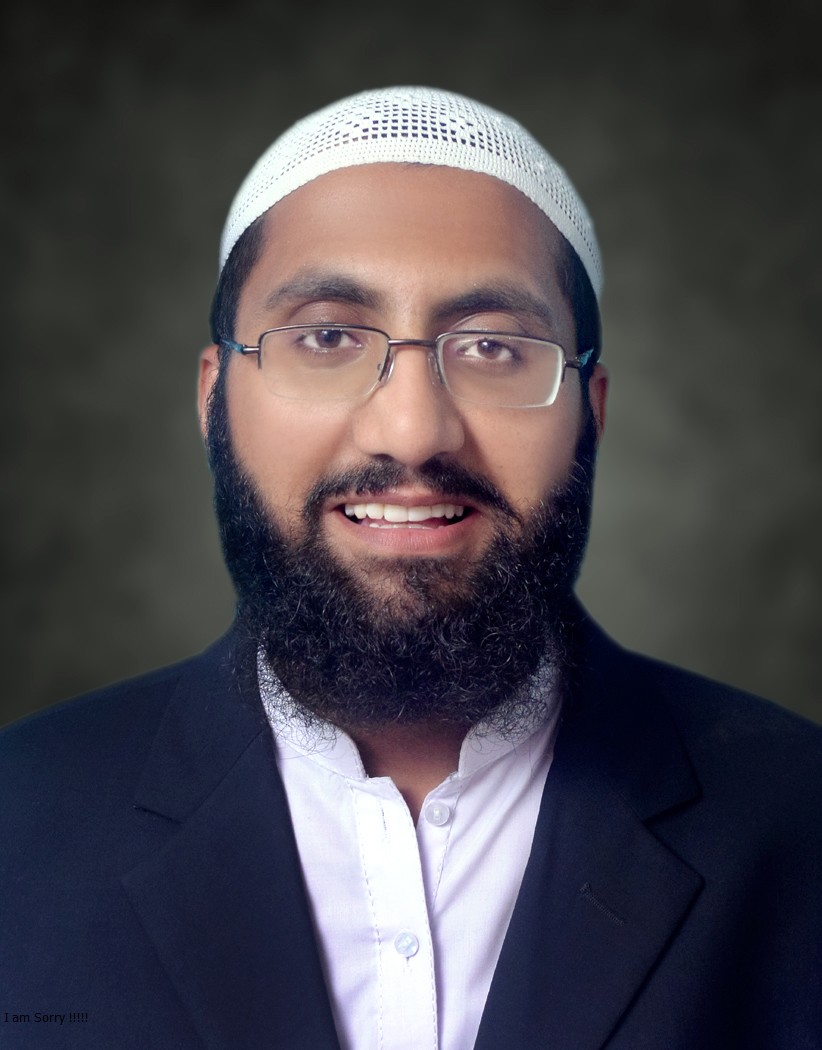
About the Editor
Mufti Qari Muhammad Jehangir TareenMufti Qari Muhammad Jehangir Tareen is a respected Islamic scholar specializing in Shariah compliance, Islamic finance, and the application of classical jurisprudence to modern investment structures. He has extensive experience reviewing real estate investment models and educational content to ensure alignment with Islamic principles. His work emphasizes the avoidance of riba, excessive gharar, and maysir, while promoting asset-backed, transparent, and ethical risk-sharing frameworks. Mufti Jehangir is well-versed in Shariah-compliant structures such as Musharakah, Mudarabah, Murabaha, Ijara, and Istisna. His reviews focus on proper contractual execution and clear communication to avoid any implication of guaranteed returns. And Allah knows best.