 Google AI
 ChatGPT
 Perplexity
Assalamu Alaikum. For the modern American Muslim business owner, wealth is more than just a balance sheet; it is an Amanah (trust) from Allah. As the global Islamic finance market hurtles toward a projected valuation of $9.7 trillion by 2029, the opportunities for Islamic investment for US residents have reached an all-time high. However, with growth comes the responsibility of discernment.
At Halalvest Real Estate LLC, we understand that you seek more than just high returns you seek “Barakah.” Our mission is to provide a trusted alternative to interest-based financing, focusing on Real Estate, Technology, and Venture Capital. By utilizing a network of over 1,000 traditional brokers and investors, we acquire assets at 20% to 50% below market value, ensuring your capital is both safe and spiritually sound.
This guide explores the five pillars of Shariah-compliant wealth building to help you navigate the US financial landscape with confidence.
1. The Divine Distinction: Is Your Profit Coming from Trade or Riba?
The most critical principle of Islamic investment for US residents is the absolute prohibition of Riba (interest). In the eyes of the Divine, money is not a commodity that grows on its own; it is a tool for exchange.
Why Are Traditional Mortgages Considered a Risk to Your Spiritual Health?
The Holy Quran is explicit in its stance: “Allah has permitted trading and prohibited riba” (Surah Al-Baqarah 2:275). Traditional banking operates on the principle of lending money for a guaranteed return, which creates an unfair advantage for lenders. In contrast, Shariah-compliant finance requires a connection to a real, tangible asset.
In the US, many ask, “Is Islamic banking available in the US?” While full-fledged Islamic banks are limited, specialized institutions like Halalvest offer “Profit-and-Loss Sharing” (PLS) models that mirror the benefits of banking without the spiritual cost. This is the primary difference between conventional and Islamic investing USA.
The Role of Murabaha in Business Growth
When a business needs equipment or a warehouse, a conventional loan is usually the first thought. However, how to start sharia compliant investing USA often begins with Murabaha (Cost-Plus Sale). In this model, the financier buys the asset and resells it to the client at a transparent markup.
- The Difference: The profit is earned from the sale of a physical item, not from the passage of time on a loan.
- Hadith Reference: The Prophet ﷺ encouraged credit sales, provided the terms were clear and fair.
2. Risk Sharing: Is Your Investment Partner Truly Sharing Your Burden?
In the Islamic tradition, a financier is not a “lender” but a “partner.” This leads us to the principles of Musharakah and Mudarabah.
Why Is a Partnership Better Than a Loan?
Conventional finance protects the lender; if your business fails, you still owe the bank. Shariah finance promotes justice through risk-sharing. According to research from Harvard Business School, this risk-sharing paradigm is often more resilient during economic volatility than debt-heavy models.
At Halalvest, we offer 12 distinct investment models, including the Hybrid Musharakah + Mudarabah (Residential Fix & Flip). In this structure, we pool capital (Musharakah) and management expertise (Mudarabah). If the property makes a profit, we share it; if it fails, the loss is borne according to the capital contribution ensuring no one is treated unjustly.
Understanding the Halalvest 12-Model Framework
To cater to various risk appetites, we have developed a suite of halal investment platforms for our investors through these structures:
- Musharakah (Warehouse Acquisition): Pure equity partnership for industrial space.
- Hybrid Istisna + Murabaha (Suburban Duplex Build): Funding construction in stages to minimize risk.
- REIT + Musharakah (Retail REIT): Access to large-scale real estate with the liquidity of a trust.
3. Asset Tangibility: Are You Investing in Real Assets or Just Paper?
The third principle is the avoidance of Gharar (excessive uncertainty) and Maysir (gambling/speculation). Islamic law requires that an investment be tied to a “material reality.”
Are You Falling for “Paper-Only” Ownership?
Many conventional investments in the US involve complex derivatives or “short selling” betting against a company’s failure. The Prophet ﷺ said, “Do not sell what you do not possess” (Sunan An-Nasa’i). This rules out most options and futures, which are often cited as the cause of market crashes in studies by the Oxford Business Group.
Islamic investment for US residents focuses on tangible assets. This includes:
- Sharia compliant real estate investment USA: Direct ownership or REITs.
- Investing in gold sharia compliant USA: Gold is a Ribawi item and must be traded “hand-to-hand” at spot prices to be valid.
- Technology & Venture Capital: Investing in the actual equity of a tech startup rather than just speculative tokens.
The Power of Sukuk for US Citizens
If you are looking for an alternative to bonds, you must ask: what is sukuk investment for us citizens? Unlike a bond, which is a debt obligation, a Sukuk is a certificate of ownership in a real asset, like a bridge or a building. The global Sukuk market is projected to reach $1 trillion in outstanding value very soon, offering a stable way for US residents to earn a “Halal coupon”.
4. Ethical Screening: What Is Hidden in Your Portfolio?
Not all profits are “Tayyib” (pure). Even if a company doesn’t deal in interest, its business activity might be harmful. This is where how to find sharia compliant stocks in USA becomes vital.
What Is Lurking in Your 401(k)?
Most standard retirement plans are filled with “Haram” industries. To stay compliant, an investment must pass two screens:
- Business Screen: No alcohol, gambling, tobacco, adult entertainment, weapons, or conventional finance.
- Financial Screen: According to AAOIFI standards, a company’s interest-bearing debt must be less than 30% of its market cap, and its interest-earning cash must also be below 30%.
| Industry Sector | Shariah Status | Reason |
| Technology | Generally Halal | Productive innovation |
| Conventional Banks | Haram | Riba-based core business |
| Real Estate | Halal | Asset-backed income |
| Defense/Weapons | Haram | Potential for harm |
| Healthcare | Halal | Social benefit |
For those seeking professional guidance, the best robo advisors for halal investing USA, such as Wahed or ShariaPortfolio, automate this screening process. They provide access to islamic stock market options for US residents while filtering out non-compliant firms like those in the gambling or tobacco sectors.
5. Wealth Purification: How Pure Is Your “Halal” Profit?
Even the most careful investor might inadvertently earn a few cents of interest from a company’s bank account. This brings us to the final principle: Purification and Zakat.
Is Your Zakat Calculation Accurate for 2026?
Zakat calculation on investments USA can be complex. For a business owner, you don’t just pay on your cash, but on your trade assets.
- Real Estate: If you hold a property for rental income, you pay Zakat on the net profit. If it’s a “Fix & Flip” (inventory), you pay 2.5% on the total market value.
- Stocks: If you are a long-term investor, you pay on the “zakatable assets” of the company. If you are a trader, you pay on the full market value.
According to Forbes and community reports, American Muslims contribute nearly $1.8 billion in Zakat annually, which is a major driver of social equity.
Navigating the Tax Implications of Islamic Investments USA
A common myth is that Shariah compliance makes taxes harder. In reality, tax implications of islamic investments USA are often manageable. For example, the IRS often treats the “markup” in a Murabaha home purchase similarly to mortgage interest for deduction purposes. Likewise, profit-sharing from a Mudarabah venture is typically taxed as capital gains or ordinary income, depending on the holding period.
Market Reality: The $217 Billion Footprint of US Muslims
To understand the urgency of Islamic investment for US residents, we must look at the data. The US Muslim population, currently estimated between 4.5 and 7.5 million, is the youngest and one of the most affluent religious groups in America.
- Entrepreneurial Power: There are over 96,000 Muslim-owned businesses in New York City alone.
- Economic Impact: The direct economic footprint of US Muslims exceeds $217 billion annually, according to community economic reports.
- Education: 36% of Muslims hold a college degree, on par with the national average, yet they face a 29% underemployment rate highlighting the need for better halal retirement planning for muslims in america .
| Metric | US Muslim Statistic | US General Public |
| Household Income >$100k | 24% | 23% |
| Age 18-24 | 26% | 10% |
| Underemployment | 29% | 12% |
Deep Dive: The Halalvest 12 Proprietary Models
At Halalvest, we don’t just talk about principles; we build structures. Here is how we apply these 30 years of ethical insight into our 12 models:
1. Hybrid Musharakah + Mudarabah (Residential Fix & Flip)
We identify distressed properties at 20%-50% below market value. Investors provide capital (Musharakah), while the renovation team provides labor (Mudarabah). This creates instant equity without a single cent of interest.
2. Hybrid Musharakah + Mudarabah (Multi-Family Renovation & Lease)
Perfect for long-term growth. We renovate underperforming apartment buildings to increase rental yield, sharing the “pure” profit with our investors.
3. Musharakah (Warehouse Acquisition)
With the rise of e-commerce, industrial space is a “Blue Ocean” for sharia compliant real estate investment USA. We co-own these assets with our clients, sharing both the risk and the rental rewards.
4. Hybrid Murabaha + Mudarabah (Retail Building Purchase)
We purchase a commercial building, resell it to the operating partner at a markup, and also share in the retail center’s operational success.
5. Murabaha (Warehouse Acquisition)
A simple, cost-plus model for those who prefer fixed, predictable installments over a set period.
6. Ijara – Option to Buy (Medical Office Space)
Ideal for Muslim doctors. You lease your office space with the option to eventually own it, turning rent into an investment.
7. Ijara Muntahia Bi Tamleek (Apartment Building Acquisition)
A lease-to-own structure for large residential blocks. Ownership transfers to you upon the final lease payment.
8. Ijara Muntahia bi Tamleek (Medical Diagnostic Equipment Lease)
We help medical centers acquire high-tech equipment, such as MRIs, through Shariah-compliant leasing.
9. Hybrid Istisna + Murabaha (Suburban Duplex Build)
Addressing the US housing shortage. We fund the construction (Istisna) and sell the units through a Murabaha contract.
10. Hybrid Istisna + Musharakah (Condominium Development)
Similar to the duplex build, but focused on high-density urban developments where investors share the development risk.
11. REIT + Musharakah (Mixed-Use Multifamily REIT)
A diversified pool of residential and commercial properties, offering the benefits of a REIT with the integrity of Shariah auditing.
12. REIT + Musharakah (Retail REIT)
A specific fund focused on retail assets that cater to the “Halal Economy,” ensuring your tenants align with your values.
Practical Steps: How to Start Sharia Compliant Investing in USA
If you are ready to transition your wealth from “Haram” to “Halal,” follow this path:
- Audit Your Current Assets: Check your 401(k) and savings accounts for Riba. Use tools like the Zoya API or Musaffa to screen your existing stocks.
- Establish an Emergency Fund: Move your liquid cash to a Shariah-compliant savings account or a “Murabaha Deposit,” where you earn a profit share rather than interest.
- Analyze Performance: Look at islamic mutual funds performance USA. Historically, Shariah-compliant indices like the S&P 500 Shariah have often outperformed conventional indices because they exclude high-debt companies.
- Partner with Experts: Real estate acquisition, development, and underwriting require professional management to avoid Gharar. Halalvest’s team brings decades of experience to ensure that every deal is “Shariah-certified”.
Conclusion: Building a Legacy for the Next Generation
The goal of Islamic investment for US residents is not just to get rich, but to achieve Falah (success) in both worlds. By adhering to the principles of no interest, risk-sharing, asset tangibility, ethical screening, and wealth purification, you are building a financial fortress that stands on the bedrock of justice.
Halalvest Real Estate LLC is here to be your partner in this journey. Whether you are interested in a residential fix-and-flip or a large-scale retail REIT, our 12 proprietary models offer a “Faith-Aligned Path to Wealth.” Let us help you safeguard your capital and your spiritual commitment today.
Are you ready to grow your wealth with Barakah? Register with Halalvest today and review our latest pre-vetted opportunities.
FAQs
Is cryptocurrency trading permissible for US residents?
Yes. Many scholars view digital assets like Bitcoin as permissible if they function as a medium of exchange. However, you must strictly avoid coins linked to gambling, interest-bearing lending, or extreme speculation that resembles forbidden games of chance.
Can non-Muslims participate in these investments?
Yes. These ethical funds are open to everyone regardless of faith. Many non-Muslims choose Sharia-compliant options because they prioritize asset-backed stability, low debt, and socially responsible business practices, which often lead to resilient long-term performance in volatile financial markets.
Are standard Vanguard ETFs considered Sharia-compliant?
No. Most mainstream Vanguard funds are not inherently halal because they often include interest-based banking stocks or companies with high debt ratios. Only invest in funds that are formally screened and certified by a Sharia board to ensure compliance.
Can I rollover my non-compliant 401(k)?
Yes. You can rollover your old employer-sponsored retirement funds into a Self-Directed IRA. This allows you to select specific Sharia-compliant stocks, ETFs, or real estate opportunities, ensuring your retirement savings grow without the spiritual burden of non-permissible interest-based assets.
Is margin trading allowed for Muslim investors?
No. Margin trading involves borrowing money at interest to purchase securities, which is strictly prohibited. Similarly, short-selling is forbidden because it involves selling assets you do not own, violating the Islamic requirement for ownership and transparency in every trade.
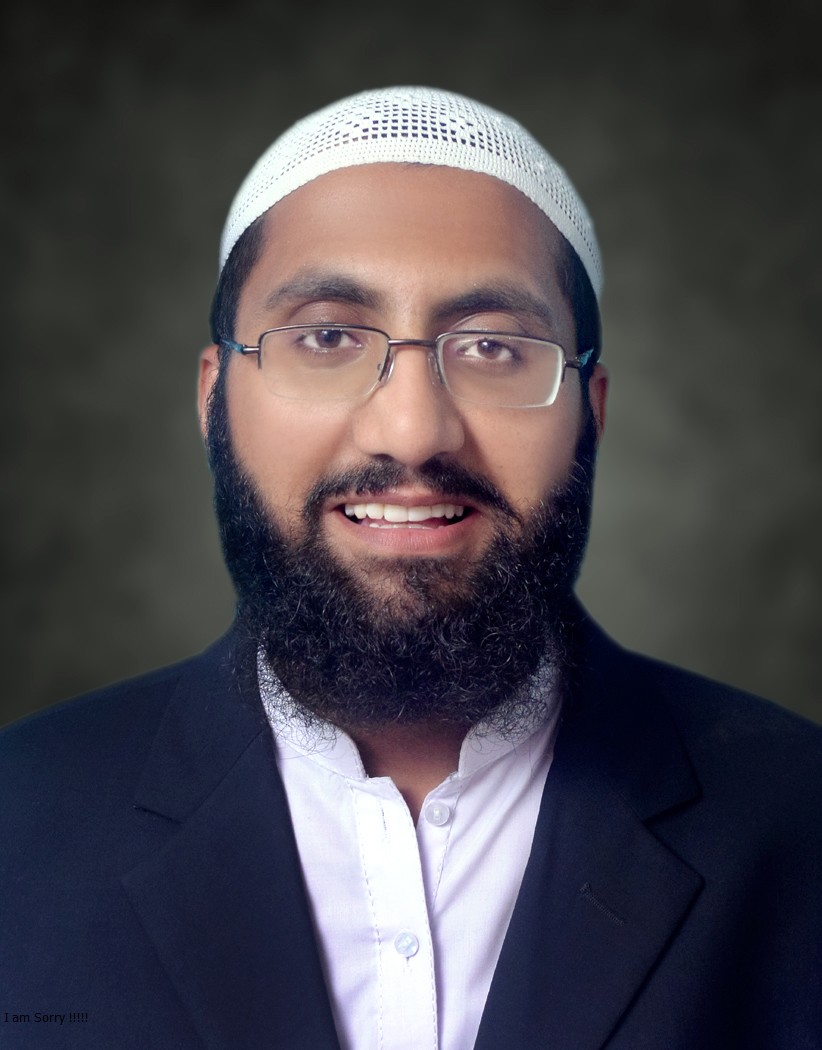
About the Editor
Mufti Qari Muhammad Jehangir TareenMufti Qari Muhammad Jehangir Tareen is a respected Islamic scholar specializing in Shariah compliance, Islamic finance, and the application of classical jurisprudence to modern investment structures. He has extensive experience reviewing real estate investment models and educational content to ensure alignment with Islamic principles. His work emphasizes the avoidance of riba, excessive gharar, and maysir, while promoting asset-backed, transparent, and ethical risk-sharing frameworks. Mufti Jehangir is well-versed in Shariah-compliant structures such as Musharakah, Mudarabah, Murabaha, Ijara, and Istisna. His reviews focus on proper contractual execution and clear communication to avoid any implication of guaranteed returns. And Allah knows best.