 Google AI
 ChatGPT
 Perplexity
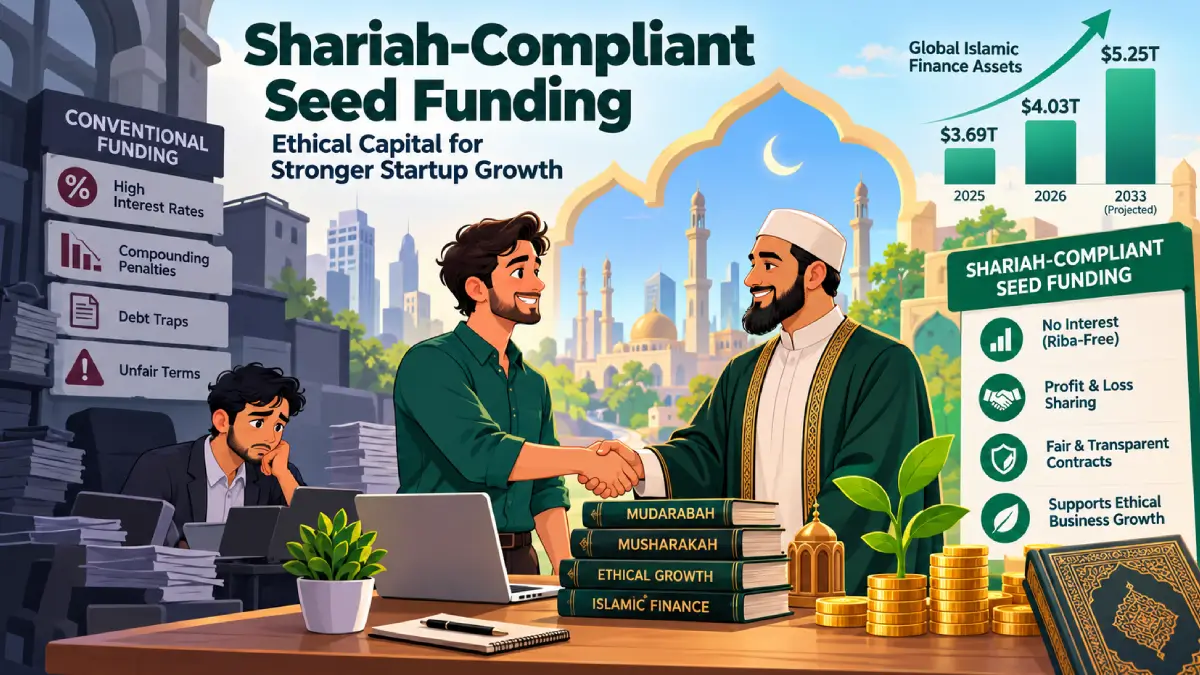
Are you a Muslim founder with a big vision? You want to build a fast-growing business. You need money to hire workers, build software, and market your products. Taking out a bank loan with high interest is out of the question. Signing standard venture capital deals can also trap you into paying interest or giving up unfair control.
This creates real challenges halal startup founders face in fundraising. You should never have to choose between growing your business and honoring your faith.
Today, a massive change is taking place across the investment world. More investors want to fund Shariah-compliant tech startups using fair, interest-free equity models. This movement opens up true Shariah-compliant investment for muslim entrepreneurs who want to scale fast without compromising their values. Understanding the real impact of halal investing on startup growth can transform how you raise capital forever.
Why Are Muslim Founders Struggling to Get Capital?
Building a company takes real cash. Most founders turn to venture capital funds or angel networks to get early money. For Muslim founders, standard options often fail.
Industry research shows a huge gap in the market. A landmark study analyzed capital allocations across top US venture funds. Out of the top firms surveyed, only 3% of financed startups had a Muslim founder. Out of 61 Muslim founders who received funding, only 2 were women. Over 90% of early-stage Muslim founders say it is hard to find seed money that follows Islamic rules.
This gap leaves thousands of talented founders without the financial backing they deserve.
What Makes Traditional VC Conflicts Hard for Muslim Entrepreneurs?
Traditional venture capital relies heavily on debt-like contracts. Understanding the differences between conventional and halal VC funding helps you avoid dangerous financial traps.
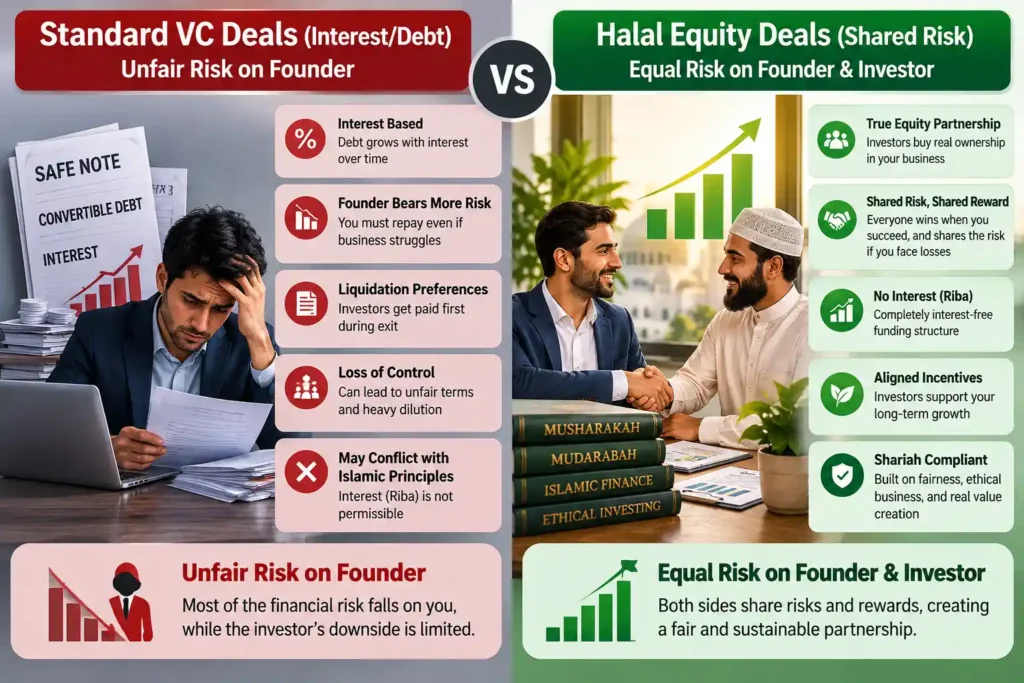
Standard VC deals often use Simple Agreements for Future Equity (SAFE) notes or convertible debt. These notes carry interest rates that accumulate over time. If your business takes longer to raise its next round, that debt grows. Interest violates Islamic rules.
Traditional VCs also use preferred stock options with liquidation preferences. This means the VC gets paid back first during a sale, even if common shareholders lose everything. Islamic finance requires all equity partners to share risk fairly.
The Real Cost of Interest-Bearing Notes and Debt
When you accept money with interest, you take on heavy financial and spiritual burdens.
Interest forces your business to pay back money even if your sales drop. It transfers all the operating risk onto your shoulders while protecting the lender. This is why founders are searching for alternatives to traditional VC for muslim startups.
You need options that bring real blessings (barakah) to your earnings. You also need to pay close attention to the legal considerations for sharia-compliant startup funding. Your contracts must use clean common equity or clear profit-sharing rules instead of interest debt.
What Is Halal VC Funding for Muslim Founders and How Does It Work?
Halal venture capital rests on risk-sharing, honesty, and real economic value. Investors do not lend money at interest. Instead, they buy real equity shares in your business.
When your company makes a profit, everyone wins. If your business loses money, the investor shares that loss with you based on their equity stake. This creates a true partnership where both sides work toward success.
Core Pillars: Equity, Real Asset Backing, and Risk Sharing
Halal funding follows three basic rules:
- Permissible Business: The business must sell permissible products and services. You cannot deal in alcohol, gambling, interest banking, or harmful items.
- Zero Interest: The contract must be free of interest (Riba) and excessive risk-taking (Gharar).
- Fair Profit Splits: The profit split must match clear, agreed-upon ratios.
This simple framework unlocks powerful ethical investment opportunities for muslim businesses. Deepening your understanding of Sharia principles in venture capital helps you pitch investors with total confidence.
What Do the Quran and Sunnah Say About Shared Risk and Trade?
The Holy Quran draws a clear line between trade and interest. Surah Al-Baqarah (2:275) states:
“Allah has permitted trade and forbidden interest.”
Trade creates real value through products, property, and services. Interest makes money from debt without taking operational risk. Islamic law strictly forbids making money purely from debt.
Prophetic traditions also emphasize pure earnings and steady effort. In Sahih al-Bukhari (Hadith 6464), the Prophet Muhammad (peace be upon him) said:
“The most beloved of deeds to Allah are those that are most consistent, even if small.”
Building a company with halal money gives you a firm foundation. In Sahih al-Bukhari (Book 34, Hadith 276), the Prophet warned:
“A time will come when one will not care how one gains one’s money, legally or illegally.”
Protecting your startup from non-compliant capital keeps your business blessed and ethical.
How Can Shariah-Compliant Tech Startups Scale With 12 Proven Investment Models?
Many founders think halal funding options are limited. That is no longer true.
At Halalvest Real Estate LLC, we use twelve distinct investment models to help Muslim founders, business owners, and real estate developers scale. These models combine equity partnership, asset leasing, cost-plus sales, and real estate trust pools. They offer smart capital solutions for muslim tech startups seeking halal funding.
Equity-Based Growth: Musharakah and Mudarabah Partnerships
Equity partnerships form the bedrock of Islamic venture capital.
Under a Musharakah structure, both the investor and the founder contribute capital and share ownership. Profits are shared based on a pre-agreed percentage, while losses match ownership stakes.
In a Mudarabah model, one partner provides full financial capital while the other provides labor and management expertise.
If you are building early-stage tech, connecting with a halal angel investors network for muslim founders helps you secure these equity deals. You can also look up a curated list of halal VC firms supporting muslim founders like HASAN. VC, Wahed Ventures, and Invest Muslim.
Halalvest Real Estate LLC uses these core equity models:
- Hybrid Musharakah + Mudarabah (Residential Fix & Flip): Combines pooled investor equity with active renovation management.
- Hybrid Musharakah + Mudarabah (Multi-Family Renovation & Lease): Shares capital costs and rental cash flow across multi-family residential projects.
- Musharakah (Warehouse Acquisition): Direct equity ownership in industrial storage and distribution facilities.
Asset-Backed Financing: Murabaha, Ijara, and Istisna Models
When your startup needs heavy equipment, inventory, or physical buildings, trade-based contracts work best.
A Murabaha contract is a cost-plus sale. The investor buys the asset and sells it to you at a marked-up price with deferred payments. This gives you clear equipment financing without interest.
An Ijara contract works like a lease-to-own setup. You lease the asset and take full ownership after making the final rental payment. An Istisna contract funds custom construction or build-to-suit projects from the ground up.
Halalvest Real Estate LLC applies these models for physical business expansion:
- Hybrid Murabaha + Mudarabah (Retail Building Purchase): Blends trade cost-plus financing with profit-sharing for commercial real estate acquisitions.
- Murabaha (Warehouse Acquisition): Uses upfront cost-plus sales for immediate warehouse purchases without interest loans.
- Ijara – Option to Buy (Medical Office Space): Grants flexible rental terms with a buyout option for healthcare ventures.
- Ijara Muntahia Bi Tamleek (Lease-to-Own) (Apartment Building Acquisition): Transfers full building ownership at the end of the lease term.
- Ijara Muntahia Bi Tamleek (Lease-to-Own) (Medical Diagnostic Equipment Lease): Helps healthcare startups acquire expensive machinery through leased ownership.
- Hybrid Istisna + Murabaha (Suburban Duplex Build): Funds new suburban housing construction with deferred sale pricing.
- Hybrid Istisna + Musharakah (Condominium Development): Partners on ground-up condominium projects using shared equity.
Real Estate Co-Investment: Hybrid REIT and Multifamily Solutions
Real estate offers stable cash flow and strong inflation protection. By blending real estate trusts with venture partnerships, investors protect their capital while generating steady returns.
Halalvest Real Estate LLC runs two REIT-based models:
- REIT + Musharakah (Mixed-Use Multifamily REIT): Pools investor funds into mixed residential and commercial hubs.
- REIT + Musharakah (Retail REIT): Focuses on income-generating retail space with shared revenue splits.
Here is how these 12 models compare across asset types:
| Model Number & Name | Asset Focus | Shariah Mechanism | Key Benefit for Founders & Investors |
| 1. Hybrid Musharakah + Mudarabah | Residential Fix & Flip | Equity + Profit Split | Flexible capital with shared renovation risk |
| 2. Hybrid Musharakah + Mudarabah | Multi-Family Leasing | Capital + Management | Ongoing rental income and property growth |
| 3. Musharakah | Industrial Warehouses | Direct Equity Partner | Pure co-ownership without interest debt |
| 4. Hybrid Murabaha + Mudarabah | Commercial Retail | Cost-Plus + Capital | Transparent asset costs and shared yield |
| 5. Murabaha | Warehouse Acquisitions | Deferred Cost-Plus Sale | Fixed payment schedules with zero interest |
| 6. Ijara Option to Buy | Medical Offices | Lease with Buy Option | Low upfront cash requirement for office space |
| 7. Ijara Muntahia Bi Tamleek | Apartment Buildings | Lease-to-Own Transfer | Full property transfer upon final payment |
| 8. Ijara Muntahia Bi Tamleek | Diagnostic Equipment | Equipment Lease-to-Own | Fast access to high-tech medical gear |
| 9. Hybrid Istisna + Murabaha | Duplex Construction | Build Contract + Cost-Plus | Smooth funding for new home builds |
| 10. Hybrid Istisna + Musharakah | Condo Developments | Build Contract + Equity | Co-development of major multi-unit assets |
| 11. REIT + Musharakah | Mixed-Use Properties | Pooled Trust + Equity | Steady rental yields from diversified hubs |
| 12. REIT + Musharakah | Commercial Retail REIT | Pooled Trust + Equity | Regular cash distributions from prime retail |
How Halalvest Real Estate LLC Solves the Capital Gap
Finding funding is hard. Finding halal funding backed by real assets used to be even harder.
Halalvest Real Estate LLC changes that equation completely. We connect active real estate investors, brokers, and loan officers with high-growth Muslim-led ventures. Our network includes over 1,000 active Real Estate Brokers, Loan Officers, and Investors across North America.
Off-Market Assets: Unlocking Equity at 20% to 50% Below Market Value
How do we create real safety for our investors while helping founders grow? We find off-market real estate assets at massive discounts.
Our acquisition team identifies foreclosures, bank auctions, and distressed properties. We routinely buy these properties at 20% to 50% below fair market value.
Buying below market value creates immediate equity. That equity cushion protects capital and backs our venture investments. If you are asking where to find halal grants for muslim entrepreneurs, exploring asset-backed venture programs offers an even better long-term runway.
Market Value: $1,000,000
Halalvest Buy Price: $600,000 (40% Discount)
Instant Equity Cushion: $400,000 (Protects Investors & Funds Growth)
Capital Structures Built for Growth and Real Estate Stability
Real estate assets provide strong cash flow and inflation backing. By tying real estate equity to venture capital deployment, we reduce overall investment risk. You get stable, interest-free capital to scale your operations.
Examining successful case studies of halal-funded Muslim startups shows how asset-backed financing helps companies survive tough market downturns. Our team brings hands-on experience in real estate acquisition, property management, private lending, renovation, and Islamic finance underwriting.
We do not just hand over cash. We guide you through project management, renovation, and strategic expansion.
How Do You Secure Halal Venture Capital for Your Startup Step-by-Step?
Securing Shariah-compliant venture money takes clear prep work. You need to show investors that your operations, financials, and growth strategy align with Islamic principles.
Here is how you can jumpstart your fundraising process:
Audit, Pitch, and Governance Alignment
- Find Faith-Aligned Networks: Learn how to find halal venture capital for startups by tapping into specialized communities. Connect with Islamic angel syndicates, ethical crowdfunding platforms, and Shariah-certified investment funds.
- Clean Up Your Capital Structure: Remove interest-bearing bank loans, lines of credit, or debt agreements. If you currently carry conventional debt, work on paying it off or restructuring it into equity.
- Refine Your Pitch Deck: Master key pitch deck tips for halal VC investors. Highlight your mission, target market size, unit economics, and competitive edge. State clearly that you are seeking interest-free equity capital through Musharakah or Mudarabah arrangements. Show how your business model generates real cash flow.
- Set Up Ethical Governance: Establish clear accounting practices that track every dollar. Work with reputable Shariah advisors to verify your contracts and business activities.
How Shariah Compliant Tech Startups Win in Today’s Market
Building a successful company does not require you to compromise your faith. Faith-conscious funding gives you the freedom to build with clarity and confidence.
By choosing interest-free equity and asset-backed partnerships, you protect your business, your investors, and your spiritual commitments. The rapid growth of Shariah-compliant tech startups proves that ethical, halal models can compete and win on the global stage.
Whether you are a tech founder looking for seed money or a real estate developer seeking co-investment, Halalvest Real Estate LLC is here to partner with you. We bring over 1,000 active real estate professionals, deep Islamic finance expertise, and twelve proven investment models to the table.
Let us help you build a profitable, blessed future. Reach out to Halalvest Real Estate LLC today and take the next step toward scaling your venture the halal way!
Frequently Asked Questions
Can non-Muslim investors join halal VC funds?
Yes, non-Muslim investors can join halal venture capital funds. Ethical capital pools welcome anyone who wants fair equity partnerships, transparent risk-sharing, and zero interest. Investors choose these platforms because they deliver solid financial returns without predatory lending rules.
Do halal VC funds charge management fees?
Yes, halal venture capital funds charge standard administrative and management fees. These upfront charges pay for operational costs, deal vetting, legal reviews, and Shariah board audits. Fees do not represent interest, so they remain completely permissible under Islamic rules.
Are equity crowdfunding campaigns considered Shariah compliant?
Yes, equity crowdfunding campaigns can be fully Shariah compliant if structured correctly. Platforms must screen target startups for permissible operations, ensure common share issuance, and eliminate interest debt. This approach allows retail investors to back ethical small businesses safely.
Can bootstrapped startups apply for halal VC?
Yes, bootstrapped startups make excellent candidates for halal venture capital funds. Self-funded founders prove their business model using real sales, avoiding debt early on. Investors favor these companies because they demonstrate strong financial discipline and lower operational risks.
Is patent protection required before pitching investors?
No, active patent protection is not mandatory before pitching halal venture capital investors. You must show clear market demand, solid revenue models, and unique product value. Proprietary technology helps, but execution and ethical governance matter far more to venture partners.
About the Editor
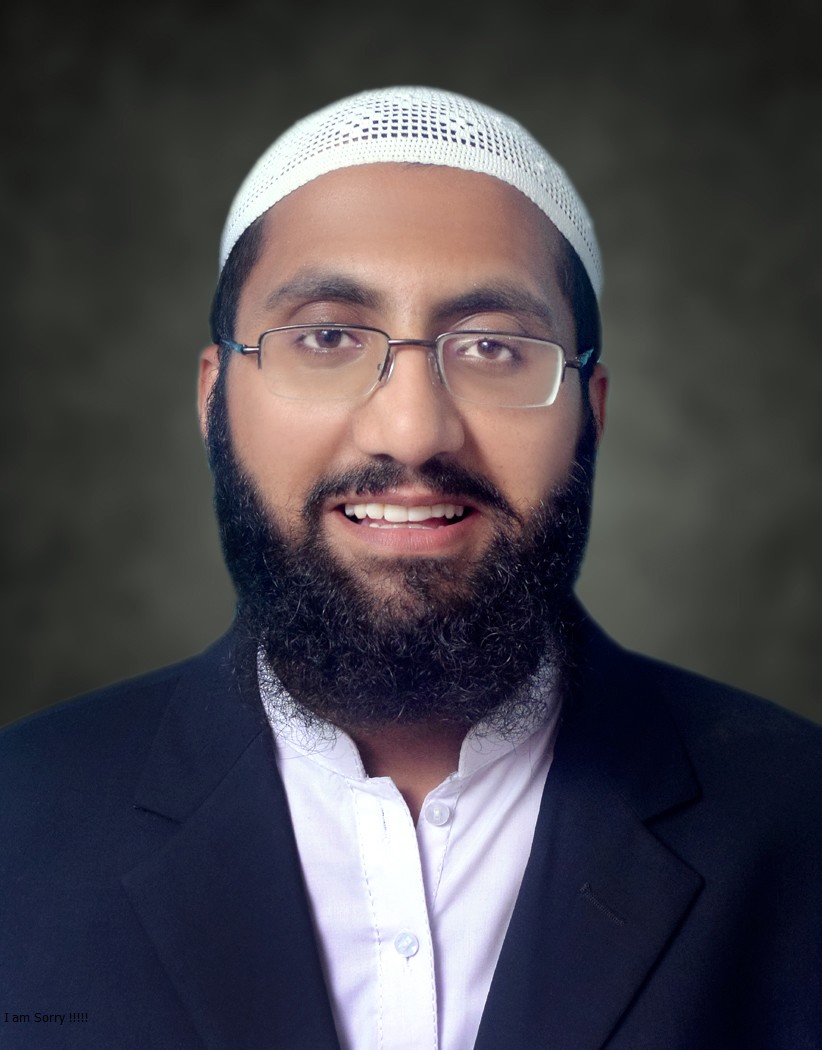
Mufti Qari Muhammad Jehangir TareenMufti Qari Muhammad Jehangir Tareen is a respected Islamic scholar specializing in Shariah compliance, Islamic finance, and the application of classical jurisprudence to modern investment structures. He has extensive experience reviewing real estate investment models and educational content to ensure alignment with Islamic principles. His work emphasizes the avoidance of riba, excessive gharar, and maysir, while promoting asset-backed, transparent, and ethical risk-sharing frameworks. Mufti Jehangir is well-versed in Shariah-compliant structures such as Musharakah, Mudarabah, Murabaha, Ijara, and Istisna. His reviews focus on proper contractual execution and clear communication to avoid any implication of guaranteed returns. And Allah knows best.